How to Test a Foundation Shade Online Before Buying
October 10, 2026 · 4 min read
Learn how to test a foundation shade online so you stop guessing in store aisles. Undertone, lighting, and finish decide the match that actually works.
Why Foundation Is the Hardest Match
Learning how to test a foundation shade online can save a lot of returns, because foundation is the hardest product to match. It has to sit against your exact skin, blend into your neck, and hold up under the lights you actually live in. One wrong undertone and the whole bottle is off.
Store swatches look convincing under shop lighting and can betray you the moment you step outside. That gap between the aisle and daylight is why so many people end up with a drawer of mismatched bottles. A preview on your own face closes that gap before you pay for it.
Foundation is also unforgiving in a way lipstick is not. A slightly off lip color can still look deliberate, but a foundation that is too pink, too yellow, or too gray reads as wrong from across the room. Precision matters more here than anywhere else.
Get Your Undertone Right First
Before any shade matching, settle your undertone, because foundation hinges on it. Warm undertones need yellow or golden bases, cool undertones need pink or red bases, and neutral undertones sit between them. Matching depth without matching undertone is the most common mistake. Settle the undertone first and the rest of the choice becomes much simpler.
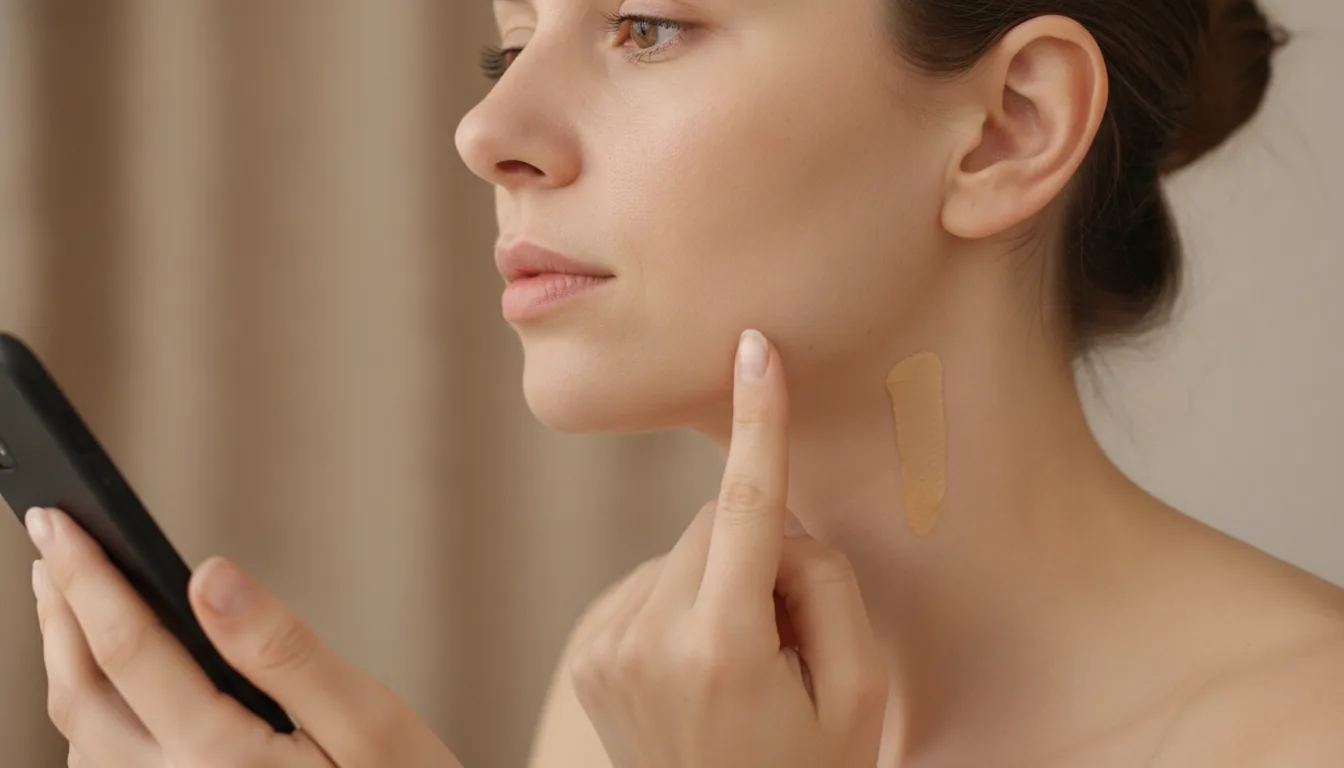
Check your match along the jawline rather than on the back of your hand. Hand skin is often a different depth and undertone than your face, so a perfect hand swatch can still be wrong up top. The jawline is where foundation meets the neck, and the neck is the standard.
If your neck and face pull in different directions, match the neck. Foundation spanning the two should disappear into the one people see beside your face. Chasing your facial color alone can leave a visible line where the face ends and the body begins. The neck is the reference point that keeps the match believable.
Judge the Shade in Real Light
Any match you make indoors is provisional until you check it outside. Daylight is the fairest judgment, and cloudy daylight shows undertone even better than bright sun. If a shade holds up in daylight, it will usually hold up almost anywhere. Never commit to a bottle based only on how a swatch looks under shop lights.
Also watch how the foundation wears, not just how it looks when fresh. Some formulas shift darker as they settle or react with your skin's natural oils. Checking a shade after an hour tells you more than the first glance ever can. Wear it through a normal day before you decide it is the one.
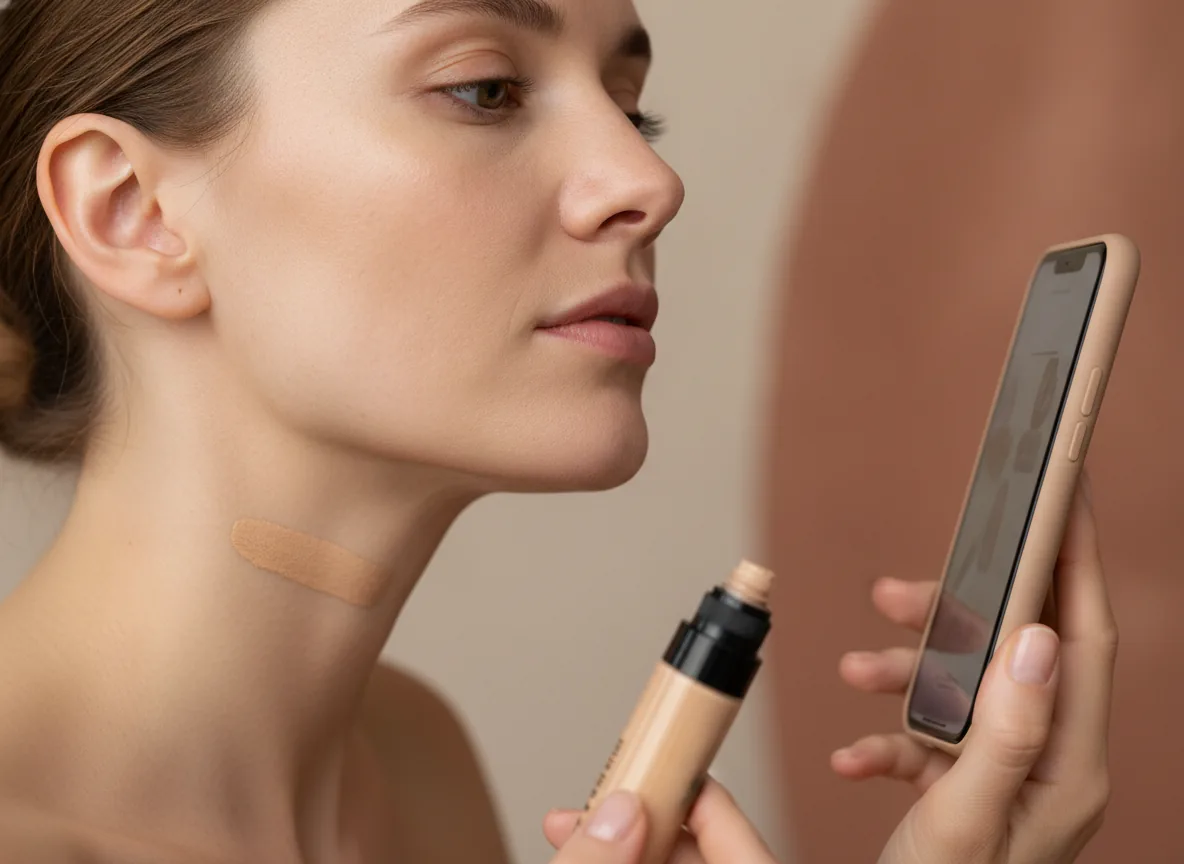
This is where previewing a foundation shade on your own photo at aitrytry.com helps, since it lets you compare options on your actual coloring instead of a stranger's arm. Seeing the match on your face narrows the field before you ever open a bottle. It also lets you test shades you cannot easily sample in a store.
Depth, Finish, and the Numbers Game
Foundation shade ranges are numbered, but the numbers are not standard across brands. A warm two in one line can read cooler than a neutral three in another. Reading the undertone description matters more than trusting a number you used before. Rely on the description of the base, not the digits on the label.
Finish changes the match as well. Matte formulas can look a touch lighter and drier, while dewy ones can appear slightly richer and more luminous. If you switch finishes, be ready to reconsider the depth even if you keep the same undertone. Treat finish and depth as two separate decisions rather than one.
Also account for how your skin changes through the year. Many people need a lighter shade in winter and a deeper one in summer, sometimes two shades apart. Buying only for today's skin guarantees a mismatch in a few months. A shade bought in July may look wrong by December, so plan ahead.
A Sample Plan That Saves Money
Start by narrowing to two or three candidate shades based on undertone and depth. Then test those few on your own face rather than sampling the whole shelf. A small, focused shortlist finds the match faster than scanning dozens of bottles. Fewer options make the final choice quicker and far less stressful.
Grab samples or ask for a small amount at the counter when you can, and wear each one for a full day before deciding. A shade that looks perfect in the morning may separate or oxidize by the afternoon. Real wear beats any instant impression.
Finally, keep notes on the shades that work, including the brand, finish, and season. A running list turns future shopping into a quick repeat instead of a fresh gamble. Testing a foundation shade online at aitrytry.com first makes that list far shorter to build. A record like that pays off every time you run out and need to restock.
See it on your own photo
Upload one photo, choose a look, and preview the result in seconds. New accounts start with 20 free credits and every generated image costs 10.
Try AI Makeup